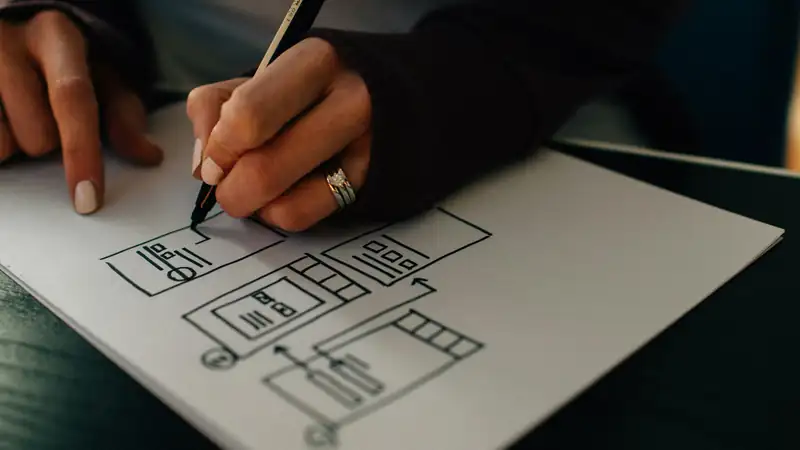
Photo on Unsplash
A good website redesign follows six steps: audit what you have, set goals, plan the content and structure, design, build and test, then launch and monitor. For most small and mid-sized businesses the whole process takes roughly two to five months, and the budget depends mostly on how many page types you need and how much custom functionality you want. The sections below explain each step, give you typical ranges, and flag where projects usually go sideways.
Step 1: Audit the site you already have
Before you spend anything, find out what is working. Open your analytics and list the pages that bring in visitors and the pages that lead to calls, form fills or purchases. Those pages are your assets. A redesign that ignores them can erase rankings and leads you spent years earning.
Make a simple inventory in a spreadsheet:
- Every page URL, its title and whether it gets traffic
- Which pages generate leads or sales
- Pages that are outdated, duplicated or thin
- Plugins, integrations and forms the site depends on
- Anything that is broken, slow or hard to use on a phone
This inventory also saves money. Agencies price discovery work, and arriving with a clean list shortens it.
Step 2: Decide why you are redesigning
"It looks old" is a valid reason, but it is not a goal. Write down two or three measurable outcomes instead. Examples: more quote requests from the Kansas City metro, a faster mobile experience, an easier way for staff to edit content, or the ability to sell online. Goals give you a way to judge proposals and to tell later whether the project paid off.
Also decide what must not change. If a particular page ranks well for a service you sell, tell your designer up front so its address and key content are preserved.
Step 3: Plan structure and content
This is the step most owners want to skip, and it is the one that causes the most delays when skipped. Sketch the new sitemap: main pages, service pages, location pages, blog, contact. Then decide who writes the words. Agencies can write copy, but it usually costs extra and still needs your input on pricing, process and the details only you know.
Content is the most common reason a project runs late. Waiting on a client for text, photos and approvals can add weeks. Assign one person on your side to own content and approvals, and give them a deadline for each batch.
Redirects and SEO basics
If any URLs change, you need a redirect map that sends old addresses to the matching new ones. Ask any team you interview how they handle this. If they have no clear answer, that is a warning sign. Our guide to SEO and digital marketing specialists in Kansas City is a good place to find help if you want a separate review before launch.
Step 4: Design
Design usually starts with the homepage and one or two interior page types, shown as mockups. You give feedback, the designer revises, and then the approved style is applied to the rest of the site. Limit feedback rounds in the contract (two or three is common) so the project does not drift.
Insist on mobile layouts being shown, not just desktop. Many local customers will find you on a phone, often while searching for a service nearby. If you need help finding designers, browse the web design category.
Step 5: Build and test
The build turns approved designs into a working site. On WordPress this typically means a theme, a set of page templates, forms, and any integrations such as a booking tool or CRM. Ask for a staging site, a private copy where you can review progress before anything goes public.
Testing should cover:
- Every form and phone link, from a real phone
- Page speed on mobile
- Browsers and screen sizes your customers actually use
- Redirects from the old URLs
- Analytics and conversion tracking
If your site sells products, add checkout, tax, shipping and email receipts to that list. The ecommerce development category lists teams that specialize in this.
Step 6: Launch and monitor
Pick a launch day when traffic is typically lower and your team can react quickly. After launch, watch your search performance and lead volume for several weeks. Small drops in the first few weeks are common while search engines re-crawl a site, but a sharp, sustained drop usually points to a missed redirect or a blocked page that can be fixed.
A realistic timeline
Every project differs, but this is a reasonable planning shape for a typical small business site of 10 to 30 pages:
| Phase | Typical duration |
|---|---|
| Audit, goals and planning | 2 to 3 weeks |
| Content and structure | 2 to 4 weeks (often overlaps design) |
| Design | 3 to 5 weeks |
| Build and testing | 4 to 8 weeks |
| Launch and follow-up | 1 to 2 weeks |
Larger sites, custom features or slow approvals stretch these numbers. Fast turnarounds are possible, but they usually require you to have content ready before the project starts.
What a redesign typically costs
Prices vary widely by region, team size and scope, so treat the following as rough, hedged ranges rather than quotes. A freelancer building a small brochure-style WordPress site may charge in the low thousands. A studio or agency building a larger custom site often lands in the mid-to-high four figures or into five figures. Ecommerce, memberships, complex integrations and custom web applications can go well beyond that.
The main cost drivers are:
- Number of unique page layouts, not just total pages
- Custom design versus a customized starting theme
- Who writes content and sources photography
- Integrations such as booking, CRM, payments or inventory
- Migration and redirect work if the site is large
Set aside a contingency of ten to twenty percent for surprises, and budget separately for hosting, maintenance and updates after launch. A site is not a one-time purchase.
How to choose who builds it
Compare three or four options, not just one. Ask each for relevant past work, a written scope, a clear payment schedule and a statement of who owns the site and its files at the end. Freelancers can be an excellent fit for smaller projects; see the freelance experts listings. Larger or more technical work may suit an agency in the full directory.
If you have a long list of requirements, consider writing a short request for proposal so every bidder prices the same thing. We cover that in a separate post on writing an RFP that agencies will actually answer.
Common mistakes to avoid
- Starting design before the content plan exists
- Letting several people give conflicting feedback instead of naming one approver
- Skipping the redirect plan
- Choosing purely on price and getting a site nobody can edit
- Forgetting ongoing care, such as updates, backups and security checks
A redesign is easier when the business side is organized before the creative side begins. Do the audit, write the goals, appoint one decision-maker, and the rest of the process becomes much more predictable.
Frequently asked questions
How long does a website redesign take?
Most small and mid-sized business sites take roughly two to five months from planning to launch. Delays almost always come from content and approvals rather than from design or development.
How much should I budget for a website redesign?
It depends on scope, but small brochure sites often cost in the low thousands, while larger custom or ecommerce projects can reach five figures or more. Get written quotes from several providers and add a contingency of ten to twenty percent.
Will a redesign hurt my search rankings?
It can if URLs change without redirects or good pages are removed. Keep a list of pages that bring traffic, plan redirects for any address that changes, and monitor results for several weeks after launch.
Do I need to write all the content myself?
Not necessarily. Many agencies and freelancers offer copywriting, but you will still need to supply facts, pricing details and approvals, and you should plan extra time and budget if they write for you.